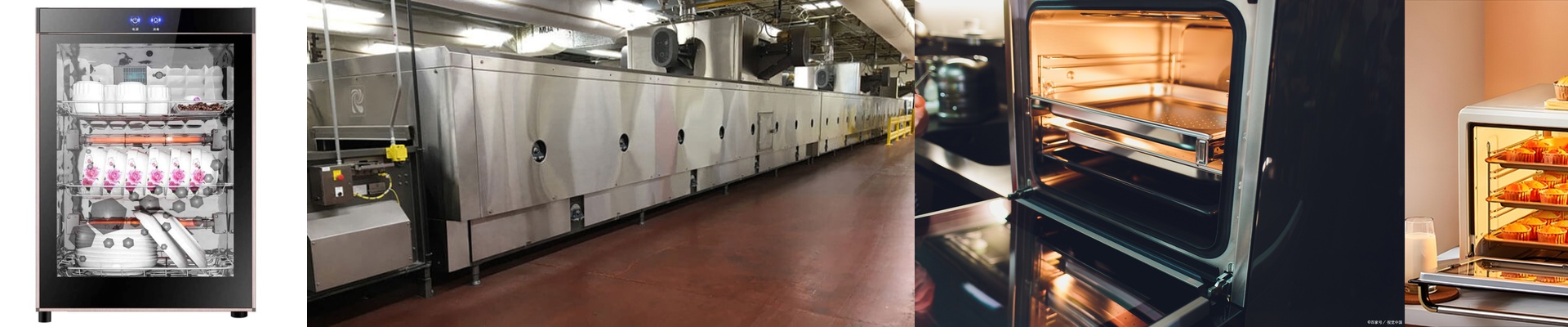

Let’s talk about infrared heaters for bread ovens
If you’re running a bread oven for 10 hours a day, you know it’s a brutal environment. Your heating elements are basically fighting a war every single shift. When it comes time to pick a linear infrared tube, there’s always that lingering question: Do I really need to pay a premium for those big global brands, or can a high-quality domestic tube actually handle the heat? Here is the honest truth about how this stuff works. The struggle of the long haul When a heater is on for 10 hours straight, that filament lives at a blistering peak temperature. If the quartz glass isn’t pure, the tube starts to bow or—even worse—crack under the stress. And then there’s the “cold spot” problem. You want the heat spread evenly across the whole tube. If the wattage bunches up in one spot, you’ll end up with a burnt crust while the center of the loaf is still raw. Nobody wants that. Making them last To get the kind of lifespan you see in the expensive name-brands, it all comes down to the seal and the alloy. Think of the seal like a fortress. If it leaks, oxygen gets in and eats the tungsten filament alive. We use a halogen gas fill to fix this. It basically catches the evaporating tungsten and pushes it back onto the filament. It’s a simple trick, but it means your replacement tube stays stable for thousands of hours. It just works. The trade-offs you should know about High-output tubes are great because they heat up fast. Your throughput goes up, and your workflow feels smoother. But there’s a catch. Cramming that much wattage into a small oven space makes everything around the wiring get incredibly hot. You have to make sure your connectors and housing can actually take that heat. Also, keep an eye on your cooling fans. If they’re clogged with flour and dust, even the fanciest tube in the world is going to burn out early. We build these things to take a beating in a real-world industrial bakery. The gap between the top domestic tubes and the pricey imports has pretty much vanished. It really just comes down to the purity of the quartz and how precise that gas fill is.