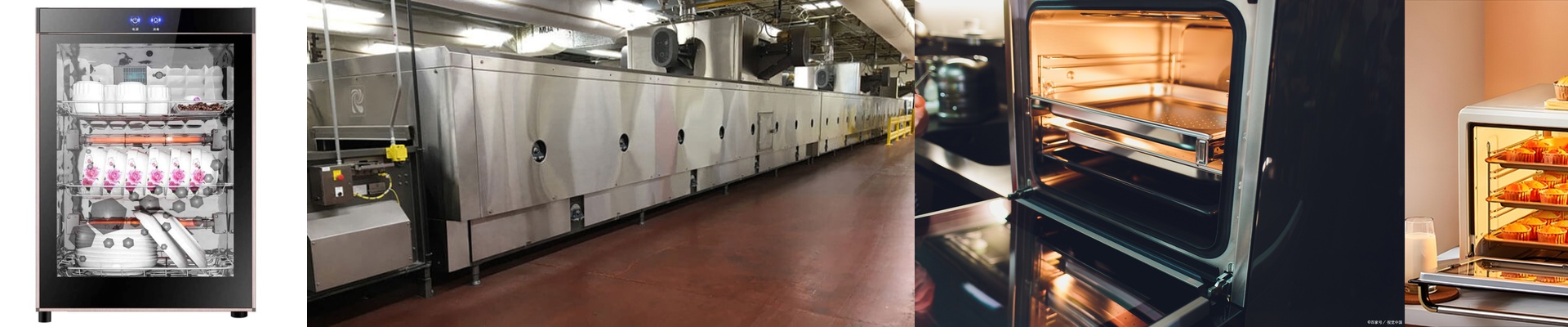

Getting That Perfect Golden Crust in a Steam Oven
If you’ve ever worked with steam ovens, you know the struggle. You pull out a loaf that’s cooked perfectly on the inside, but the outside looks… well, pale. It’s frustrating. The humidity that makes the bread great also kills the Maillard reaction, which is just a fancy way of saying it stops the crust from browning. To fix this, we use short-wave IR emitters. Think of these as heat lamps on steroids. Instead of trying to warm up all the air in the oven, they shoot energy directly into the surface of the dough.
Why “Fast” Heat Actually Matters
Most heating elements are just too slow. They take forever to get hot and even longer to cool down. In a busy bakery, that lag is a nightmare. By the time the element cools off, your bread is already burnt. That’s why we go with halogen-filled quartz emitters. They react almost instantly. You can flick the heat on the second the bread hits the final zone and kill the power the moment it looks right. It gives you total control.
The Nitty-Gritty on Power
If you want that specific, deep golden-brown look, you need a lot of power packed into a small space. We usually use high-wattage tubes because short-wave radiation cuts through the moisture on the bread surface way faster than the slower, longer waves. But here is a heads-up: you have to make sure your wiring can actually handle it. These tubes pull a lot of current. If your leads aren’t rated for the load, you’re going to end up with burnt-out terminals, and nobody wants to deal with that mid-shift.
The Trade-offs (Because nothing is perfect)
These lamps are fast, but they’re also fragile. Quartz is temperamental. If a drop of cold water or some heavy steam condensate hits a red-hot lamp, it can crack instantly. It’s called thermal shock, and it’s a pain. You’ve got to be smart about your shielding and how the air flows around the lamps to keep them dry. Also, keep an eye on your cooling fans. If they aren’t pulling enough heat away, the reflectors will start to degrade. Once those reflectors go, your efficiency drops and you’re wasting energy. One last tip: use high-temp connectors. These things expand and contract constantly as they heat up and cool down. Cheap connectors will loosen up, and a loose connection is a recipe for disaster.