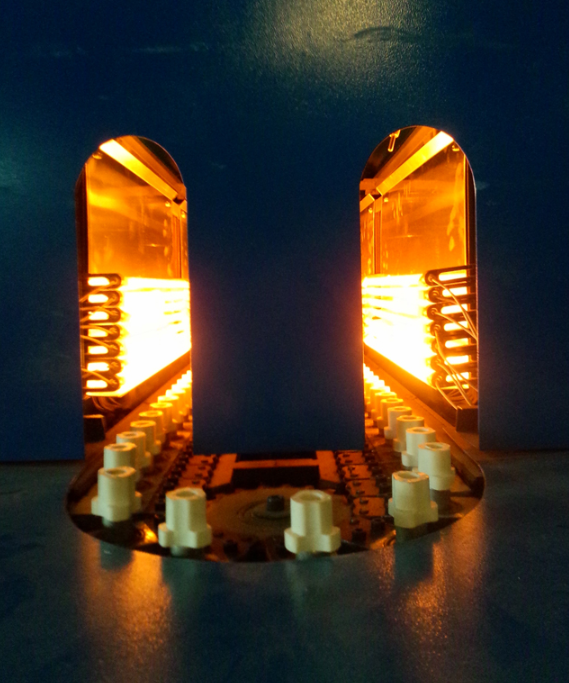
On the blow molding line, the heating tunnel is where the day gets made or undone. With the SIPA SFR 20, uneven preform heating shows up fast: off-center wall thickness, a weak stretch, and scrap counts that creep upward. When a lamp starts to underperform, it isn’t just heat you lose—it’s cycle time, too, as you chase tolerances that keep slipping. What matters, technically We built the SFR 20 replacement lamp as a 1:1 match to the original spec, so it drops straight into the existing socket without rewiring. The emitter is short-wave infrared, chosen for fast response and tight control across the preform neck and body. Specs are set to the machine: correct voltage, wattage, quartz envelope, and R7s connector length. The geometry is repeatable, so the heating profile stays consistent from lamp to lamp. Why it works where it matters In the SFR 20, consistent infrared output keeps the preform surface temperature even, so stretch blow molding runs at the designed cycle. You see fewer rejects from inconsistent wall thickness, and less downtime spent re-balancing the heating profile. Energy use stays in line because the lamp comes up to temperature quickly and holds steady—no waste from emitters that can’t keep up. A few shop-floor details Installation is straightforward, but the lamp has to stay clean and dry. Fingerprints on the quartz can cause hot spots and cut life short. Check the lamp orientation and reflector alignment so you don’t get shadows in the heating zone, and keep the tunnel glass clean for stable temperature. Match the voltage at the terminal—mismatched voltage will kill the lamp fast. We stand behind it with OEM-grade materials and full dimensional inspection, so you can swap it in with confidence and keep the line moving.